• Type 1: Hypoxaemia with normal (or low) Pa
    • Primarily a failure of oxygenation
    • Usually responds to oxygen therapy
  • Type 2: Hypoxaemia with an increased Pa
    • Failure of ventilation and oxygenation
    • Requires ventilatory assistance as well as supplemental oxygen
  • ABG results of P <60mmHg or P >50mmHg with an associated pH <7.30 is suggestive of acute respiratory failure

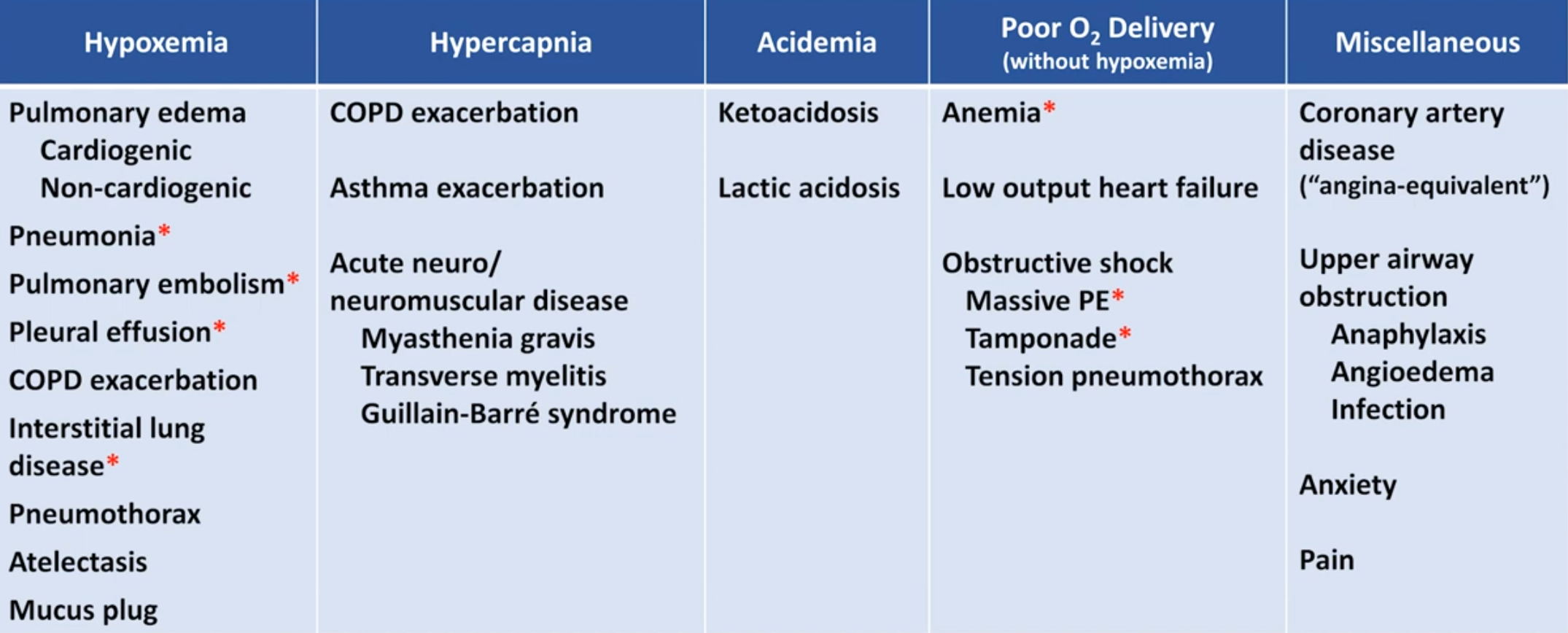
Causes

  • Acute obstruction
  • Pulmonary
  • Cardiovascular
  • Neuromuscular
    • Depressed level of consciousness
    • Muscular weakness (Guillain-Barré syndrome, myaesthenia gravis, muscular dystrophy)
    • Drug intoxication (opioid, sedative)
    • Poisoning (carbon monoxide, opioid)
  • Most common aetiologies for acute dyspnoea in hospitalised patients:
    • Alveolar problem
      • Flash Pulmonary oedema (e.g. due to tachyarrhythmia, ischaemica/ACS, hypertensive emergency, TACO)
      • Aspiration pneumonitis
      • TRALI
    • Airway problem
      • Anaphylaxis
      • Angioedema
      • Mucous plug
      • Endotracheal tube dislodgement
    • Pulmonary embolism
    • Pneumothorax (post-procedure)
    • Tamponade (post-procedure, post-MI)

Overview of Assessment and Management

  1. Always call for help
  2. Give oxygen
  3. Assess the patient
  4. CXR/ABG/VBG
  5. Consider adjuncts
  6. Escalation of care

Assessment

  • Can remember as RATES (respiratory rate, auscultate, trachea position, effort of breathing and saturation)
  • Airway Patency
    • Assess airway function
      • Signs of partial airway obstruction:
        • Hoarse voice, inability to speak or cough
        • Stridor, snoring or gurgling secretions
        • Soft-tissue retraction-tracheal tug, rib or abdominal recession
        • Loss, or an uncoordinated rise and fall, of the chest and/or abdomen
          • ‘See-saw’ pattern of chest and abdominal movement: the chest is drawn in and the abdomen expands on inspiration and the opposite occurs on expiration
        • Altered level of consciousness or mental status or agitation
        • GCS ≤8
      • Features of partial airway obstruction
        • Tripod position
        • Reluctance to speak or cough
        • Increased work of breathing with nasal flaring accessory muscle use
      • Inspect
        • Upper airway for foreign material if possible or using laryngoscopy
        • Erythema or urticaria with lip, tongue or palatal swelling
          • Listen for bronchospasm and examine for circulatory features that suggest Anaphylaxis
        • Localised trauma, burns infection or tumour
      • Palpate the anterior neck, including the thyroid cartilage for pain, inflammation, crepitus, swelling or masses
      • Investigate for any cause of depressed consciousness (e.g. hypoglycaemia or opioid intoxication)
      • Signs and features of complete airway obstruction
        • No stridor, airway sounds or breath sounds on lung auscultation
        • Inability to ventilate the patient with a bag-mask
        • Rapid development of cyanosis and unconsciousness
    Link to original
  • Work of breathing
    • Signs include: ↑ RR, use of accessory muscles, soft-tissue recession, ↑ HR, sweaty/clammy skin
  • Effectiveness of respiratory function (saturation probe)
    • Hypoxia
      • Cyanosis (oxygen saturation <88%)
      • Cardiac ischaemia or arrhythmias
      • Acidosis from tissue hypoxia (lactic acidosis)
      • Anxiety, agitation or depressed consciousness
      • ↑ A-a gradient on ABG
    • Hypoventilation
      • Vasodilation
      • Headache, drowsiness and lethargy
      • Asterixis
      • Acidosis - respiratory acidosis (inadequate removal of )
  • Respiratory decompensation
    • Decompensation is when severe or prolonged respiratory insult causes exhaustion or a reduction in the patient’s physiological reserves
    • Signs of decompensation
      • Gasping
      • ↓ respiratory effort
      • Sweating, lethargy, apathy, drowsiness and coma
      • Tachycardia → bradycardia (preterminal sign)
      • Respiratory arrest followed by cardiac arrest
    • If a patient has any features of decompensation, call senior staff or a MET call immediately
  • Diagnose the cause

Suggested Diagnosis

By History

  • Cardiovascular risk factors (e.g. HTN, DM, smoking, prior MI) ⇒ APO
  • Aspiration risk factors (e.g. post-stroke, sedating medications) ⇒ Aspiration
  • Intrathoracic pressure within the last 24 hours:
    • Thoracocentesis, central line, PPM insertion ⇒ Pneumothorax
    • Pericardiocentesis, PPM lead extraction ⇒ tamponade
  • New medication started recently
    • Anphylaxis (<6 hrs)
    • Angiodema (days)
  • Transfusion within last 6 hours ⇒ TACO, TRALI

By Exam Finding

  • Hypotension ⇒ PE, ACS, Pneumothorax, tamponade, Anaphylaxis
  • Bilateral crackles ⇒ APO, Aspiration
  • Wheezing ⇒ Non-specific
  • Asymmetric lung findings ⇒ Aspiration, Pneumothorax, mucous plug, ET tube dislodgement
  • Signs of DVT ⇒ PE

Investigations

Management

  • Sit patient upright
  • Do not neglect airway issues and place heavy importance of suctioning if relevant (e.g. aspiration, mucous plugging)
  • Use supplemental oxygen in all hypoxic patients with high-flow oxygen at 15 L/min through a mask with a reservoir, (target oxygen saturation > 90-92%)
    • High inspired oxygen concentrations do not depress ventilation in patients who are in respiratory distress
    • In patients with COPD who chronically retain titrate use of a venturi mask
      • Giving too much oxygen to patients who chronically retain causes a rise in Pa because:
        • Changes in pulmonary vasoconstriction, dead space and shunting (V/Q mistmatch)
        • Haldane effect (haemoglobin molecules release in the presence of oxygen)
        • Blunting of the hypoxic drive; these patients depend on mild hypoxia to stimulate their respiratory centre
      • If unsure if they are a chronic retainer, check any previous blood gas results
      • Begin empirical treatment under pulse oximetry monitoring
      • Increase/decrease oxygen delivery until saturation is 88-92% by using different oxygen mixers in a venturi mask or changing the flow rate in a simple mask
      • Recheck blood gases and watch for a change in :
        • Continue with current therapy if is normalising
        • Decrease oxygen deliver if is increasing but maintain saturation of 88-92%
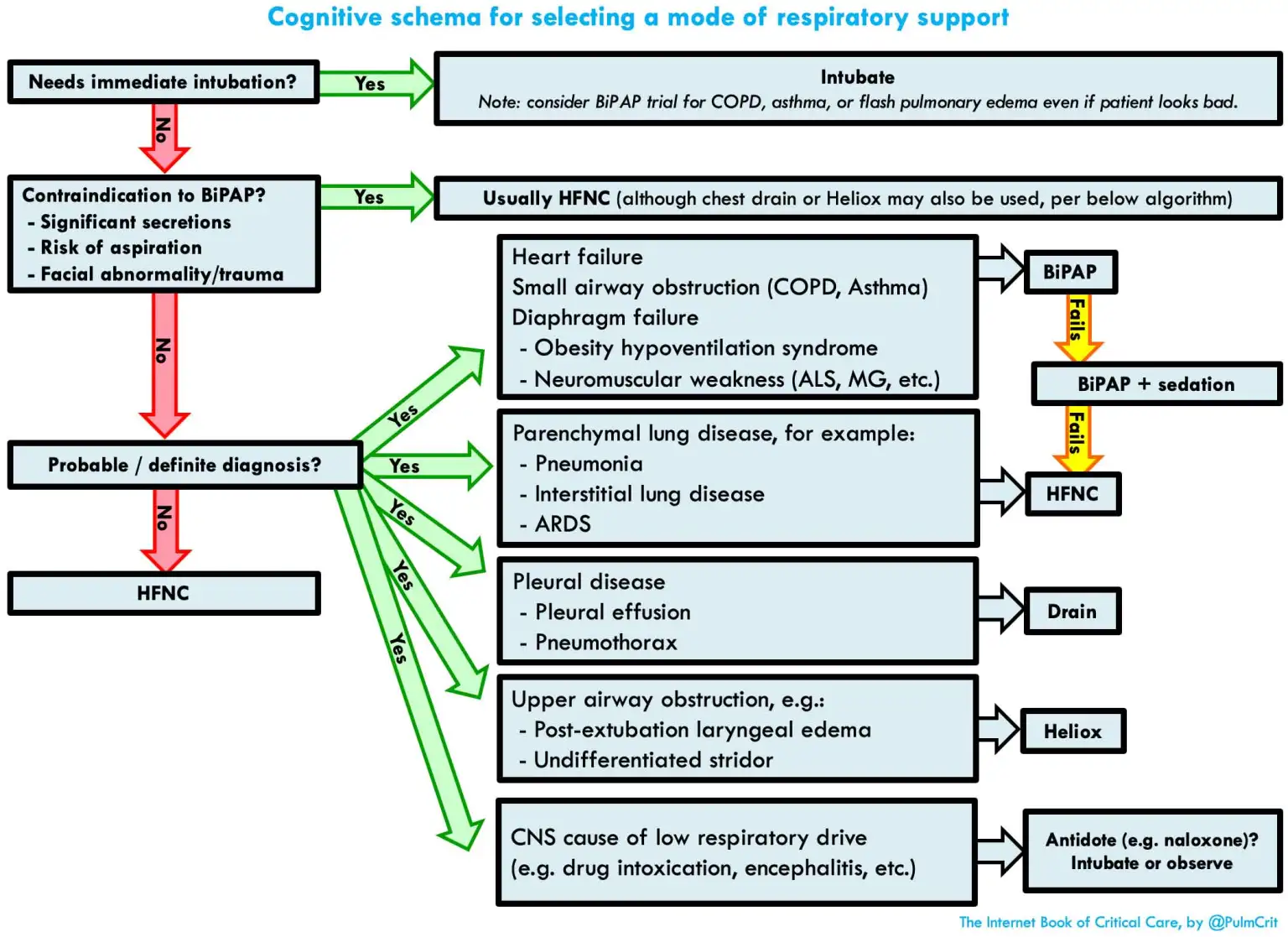
          • If is increasing and you are unable to maintain oxygen saturation >88%, the patient requires assisted ventilation (BiPAP) see ventilation below
  • Blood gases are necessary to determine the adequacy of ventilation (can use either venous or arterial as it will likely not influence immediate management) - see ABG Interpretation
  • If wheezing, consider bronchodilators (see: COPD Exacerbation) perhaps nebulised
    • Rule out tachy-arrythmia or demand related ischaemia if you can prior
  • If signs of APO consider nitrates if BP tolerates
    • Avoid jumping to diuretics in a euvolaemic patient with pulmonary oedema
  • Consider reversing opiates
  • Consider NIV

Ventilation

  • Ensure the patient has not received respiratory depressants (e.g. opioids) in the past 24 hours (e.g. check pupils)
    • Give naloxone 0.2mg up to 2mg IV, SC or IM every 5 minutes repeated until alert
      • Be careful to avoid a withdrawal reaction: Start at 100 mcg IV in opiate-dependent patients
  • Bag valve mask assisted manual ventilation may be required in a patient with ↓ LOC until definitive ventilation is available
    • Consider: CPAP, BiPAP ventilation or NIV machines
  • If still no improvement contact ICU and make arrangements for ETT intubation
  • Acute respiratory acidosis with a pH <7.2 usually requires mechanical ventilation until the precipitating cause can be reversed