Practicalities
- For patients on twice daily diuretics, give the 2nd dose in the early afternoon instead of at night (morning & midday dose)
Thiazide Diuretics
- Mechanism of action
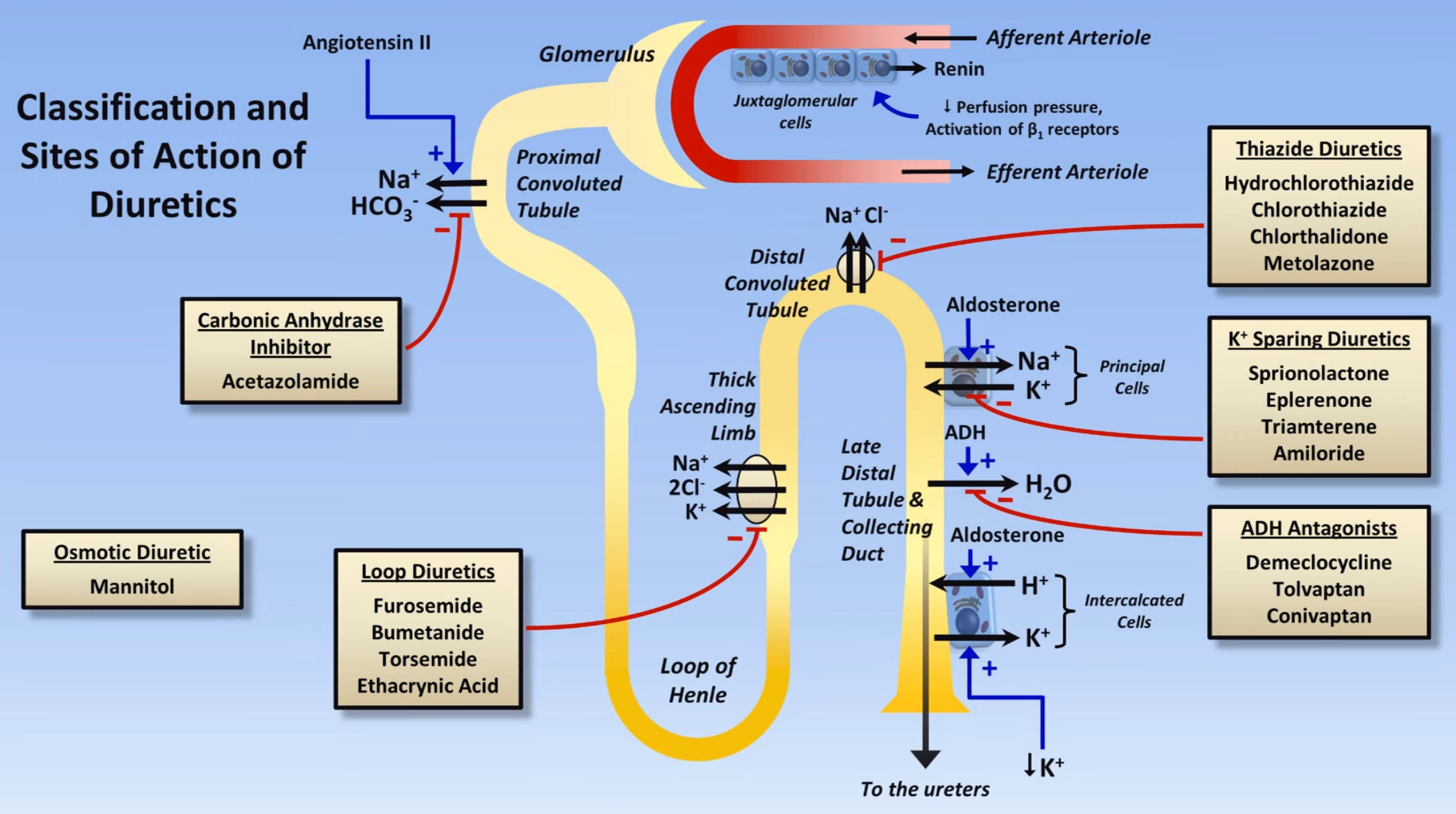
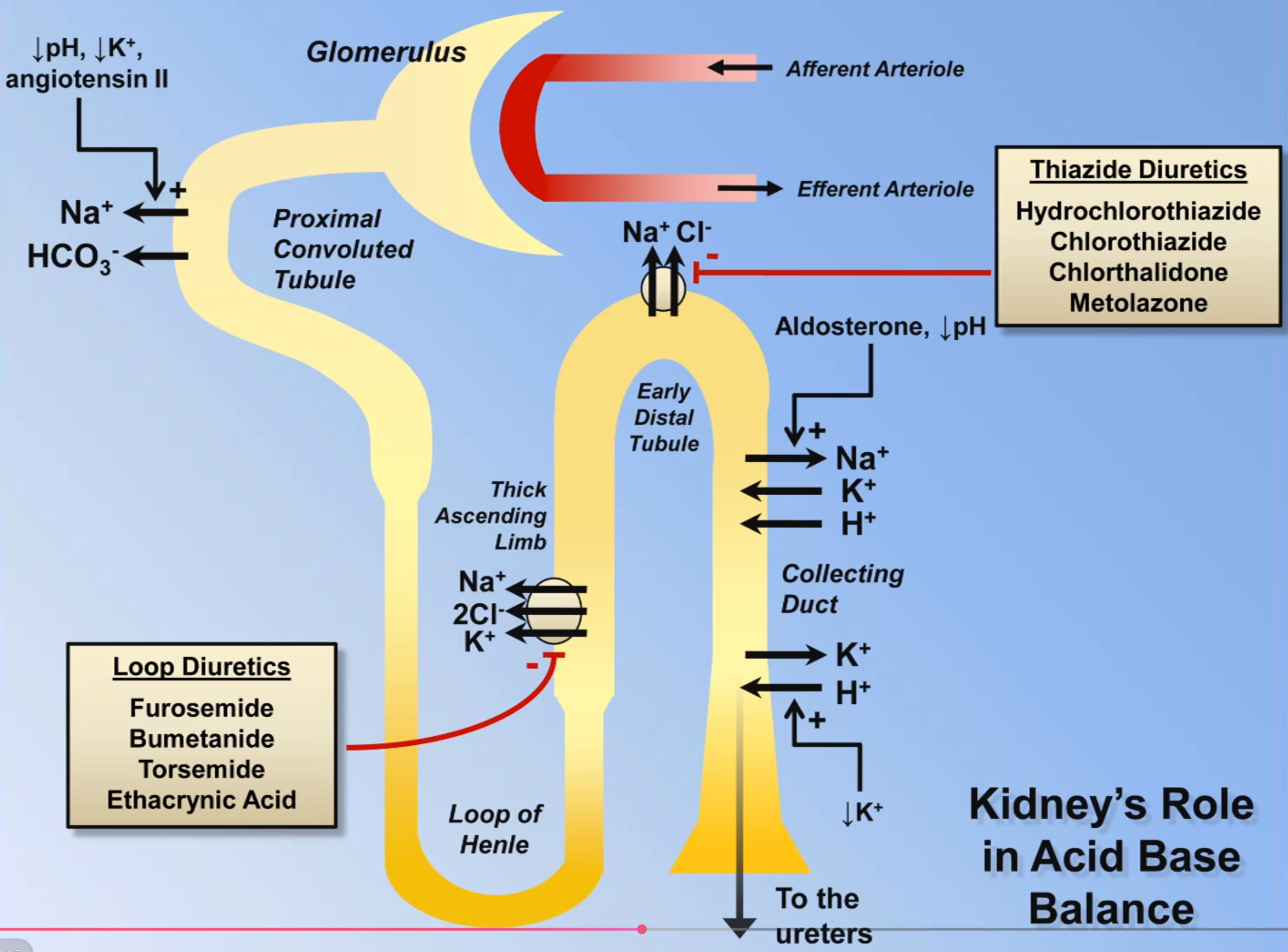
- Inhibit sodium reabsorption at the beginning of the DCT by blocking thiazide sensitive symporter
- Increased sodium delivery to the DCT promotes excretion of potassium
- When used in lower doses for hypertension, thiazides lower BP mostly by a vasodilator effect
- Indications
- Hypertension
- Oedema associated with heart failure or hepatic cirrhosis
- Nephrogenic diabetes insipidus
- Adverse effects
- Dehydration and postural hypotension
- Hypokalaemia
- Hyponatraemia
- May precipitate heart failure with significant oedema at higher doses in conjunction with salt-restricted diet and/or potassium-sparing diuretics
- Hypercalcaemia
- Also causes hypocalciuria which decreases incidence of stones
- Gout
- Secondary to diuretic-induced hyperuricaemia typically at higher doses
- Measure serum urate levels every 2-5 weeks and adjust dose of urate-lowering drugs if necessary
- Impaired glucose tolerance
- Pregnancy
Acetazolamide
Sources
- Passmedicine: Thiazide and thiazide like diuretics
- AMH Online: Thiazide and related diuretics