Part of: Mechanical Ventilation
Pressure Waveform
Peak Pressure
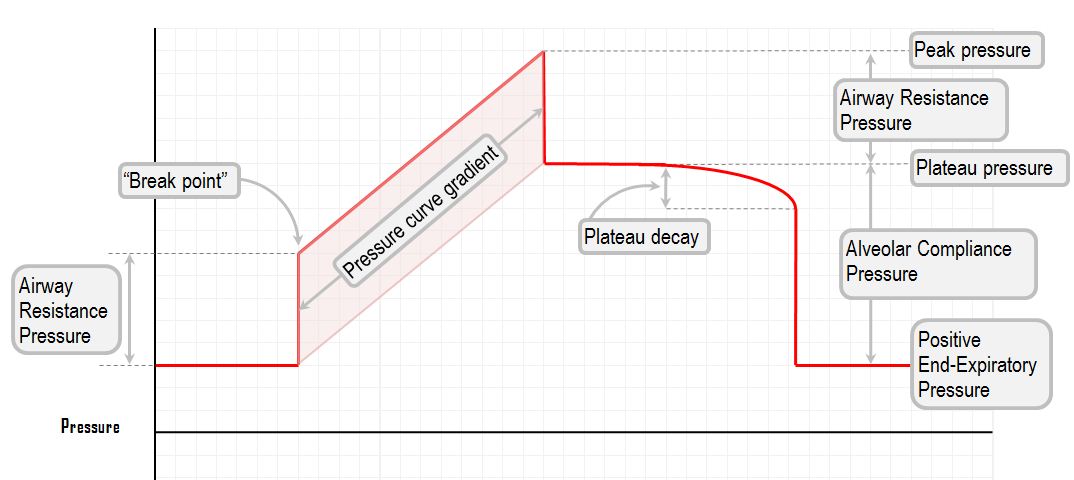
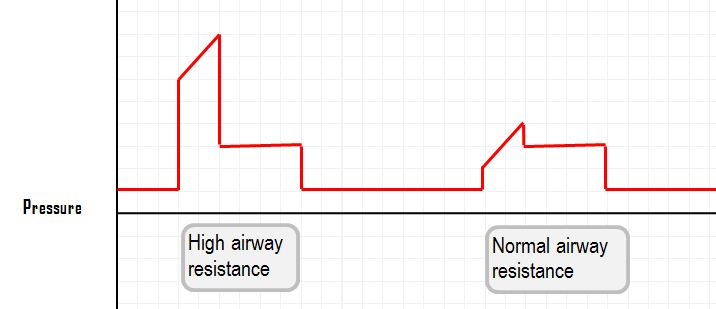
- High peak pressure suggests possibility of airway narrowing (e.g. ET tube being kinked, ventilator tubing being full of fluid or bronchospasm)
Plateau Pressure
- Pressure in the lung after all flow has stopped; directly related to the compliance of the lung parenchyma
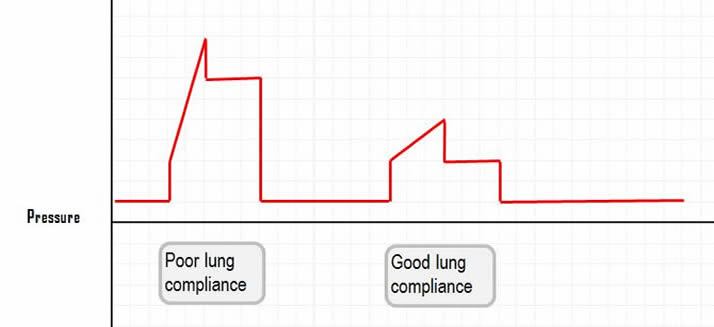
Plateau Decay
- In an inspiratory pause, the pressure will gradually decrease from the initial plateau pressure; this occurs because of:
- Elastic energy stored in the lung tissue and chest wall is dissipating
- Lung units with different time constants are exchanging gas
- Some of the gas is being absorbed into the pulmonary circulation
- Some of the gas is leaking out of the circuit tubing
Flow Waveform
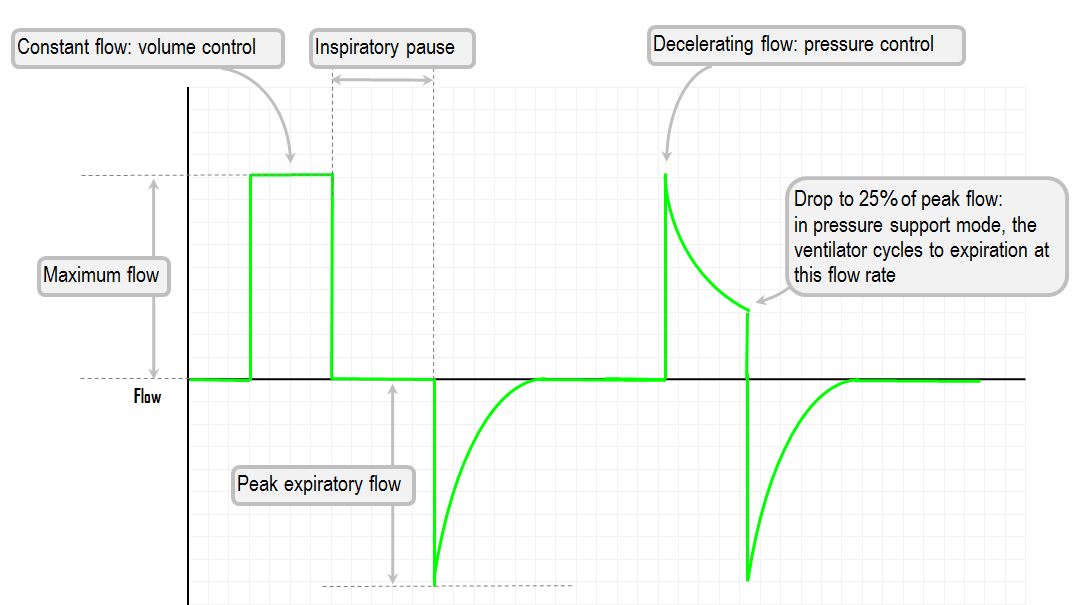
Maximum Flow
- In pressure control modes, the flow waveform is decelerating
- A rapid deceleration of this flow indicates either that the lung compliance is poor or that airway resistance is high
End-Inspiratory Flow
- If the end inspiratory flow is positive, then increasing inspiratory time will produce larger tidal volumes
Peak Expiratory Flow
- The rate of expiratory flow is determined by the resistance of the airways and the elastic recoil of the lungs and chest wall
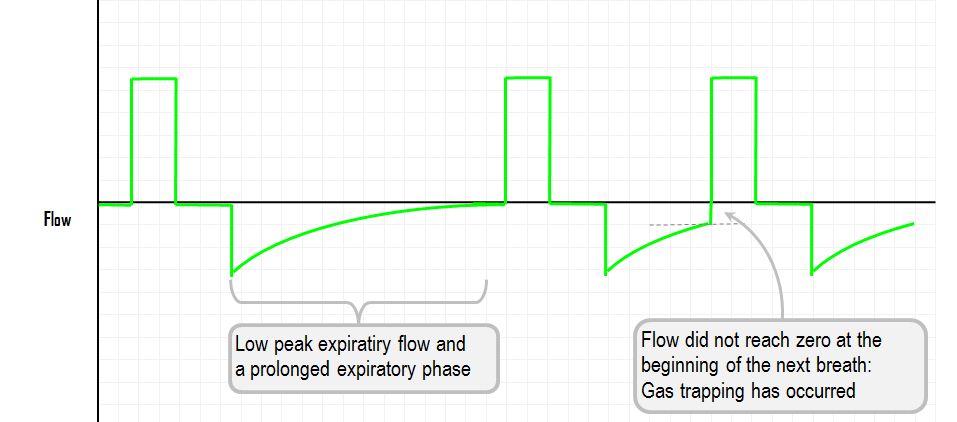
- A low expiratory peak flow suggests airway obstruction (e.g. bronchospasm) or an over-compliant chest wall
- If expiratory flow is prolonged, the airway resistance must be increased
- If flow does not reach zero by the beginning of the next breath, there must be gas trapping
Pressure-Volume Loop
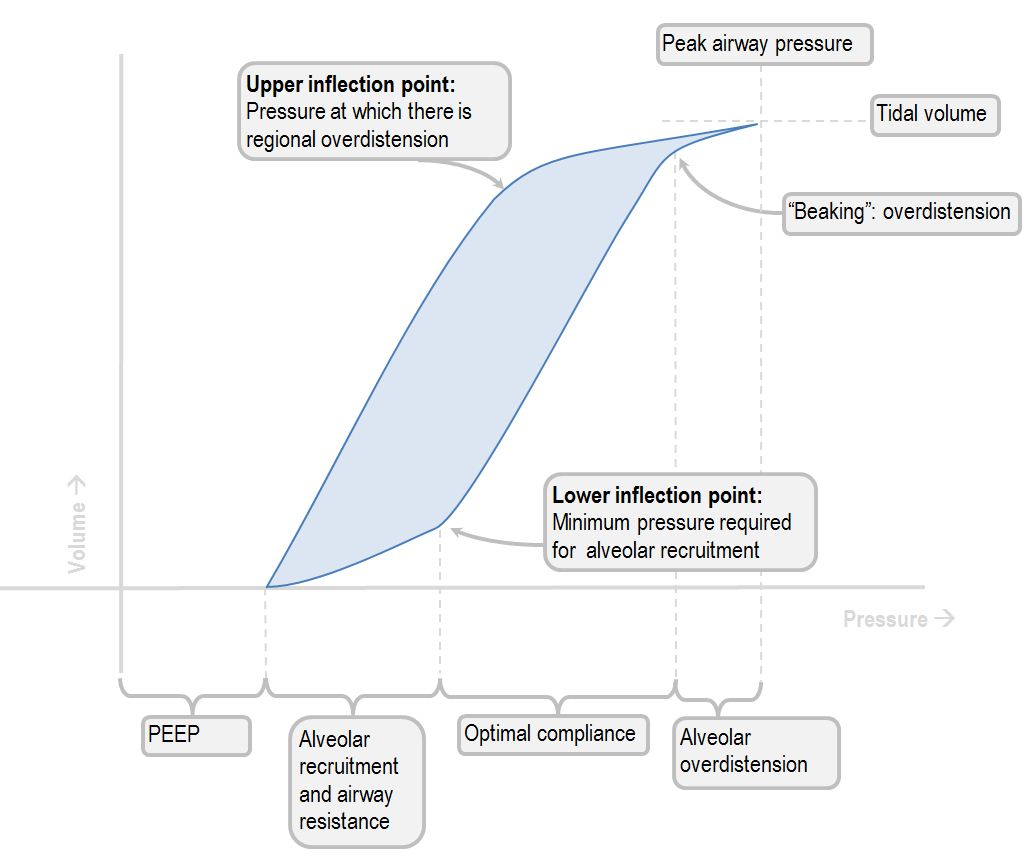
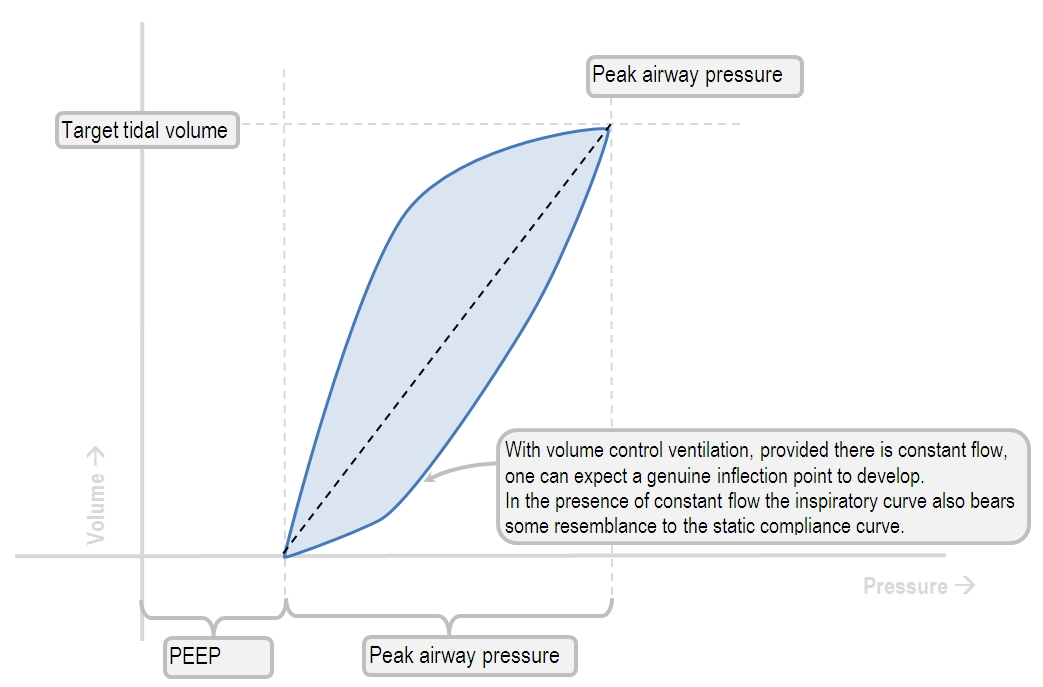
- Above mode is mandatory with volume as the control variable and flow as constant
- Lower inflection point (): the airway pressure which designates the critical opening pressure (takes more pressure to re-inflate a collapsed alveolus than it takes to distend a deflated one)
- Upper inflection point: corresponds to the deflation of the most hyperinflated lung units
Idealised Pressure-Volume Loop of Volume-Controlled Ventilation
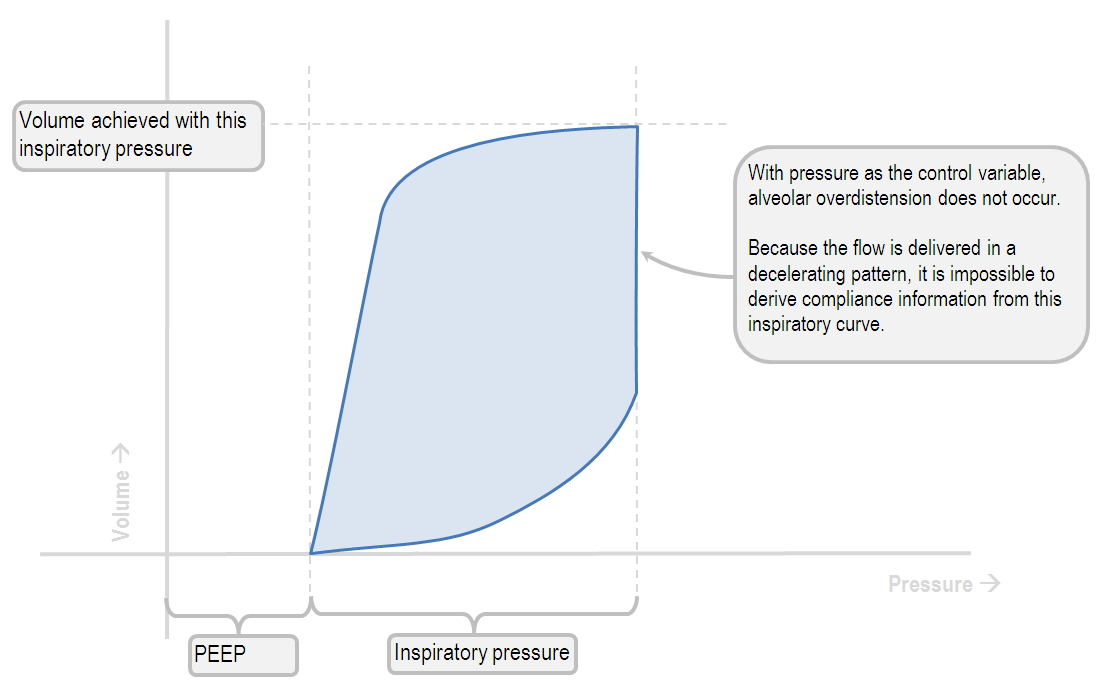
Idealised Pressure-Volume Loop of Pressure-Controlled Ventilation
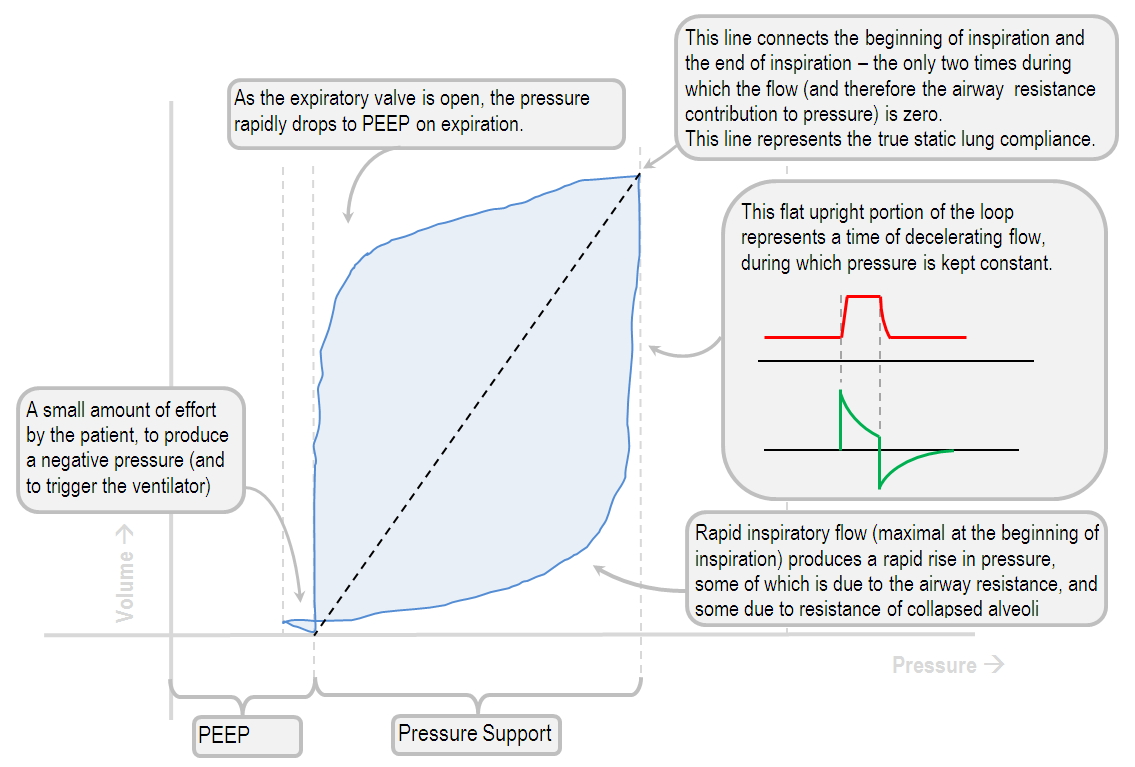
Realistic Pressure-Volume Loop of Pressure-Controlled Ventilation
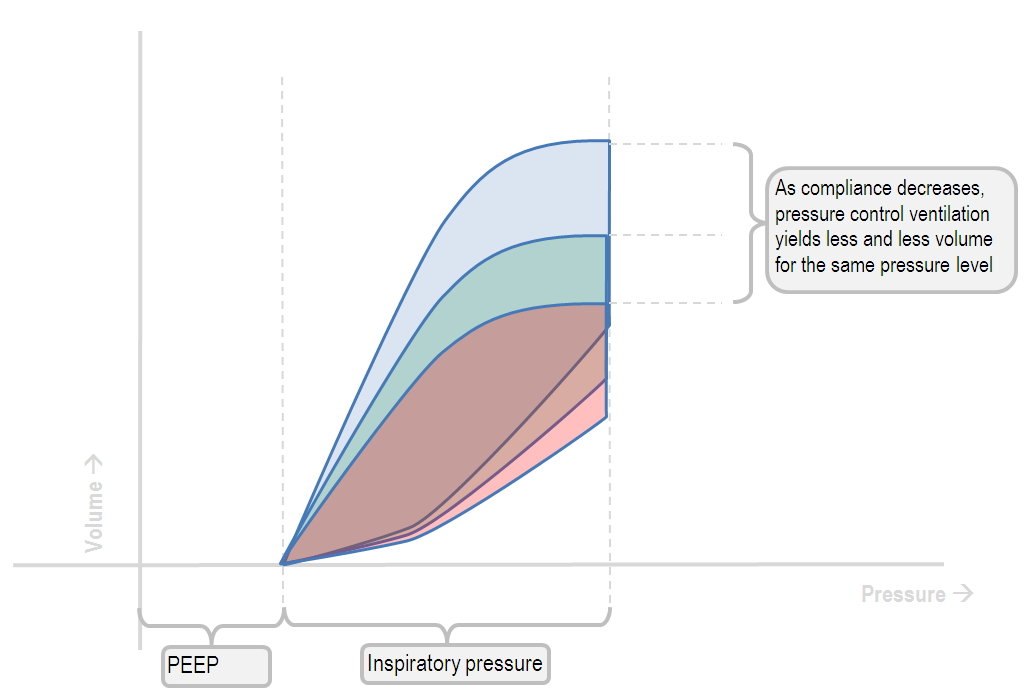
Changes with Respiratory Compliance
- As lungs decrease in compliance, in volume-controlled mode higher peak airway pressures will develop and a beaked region will develop indicating alveolar overdistention
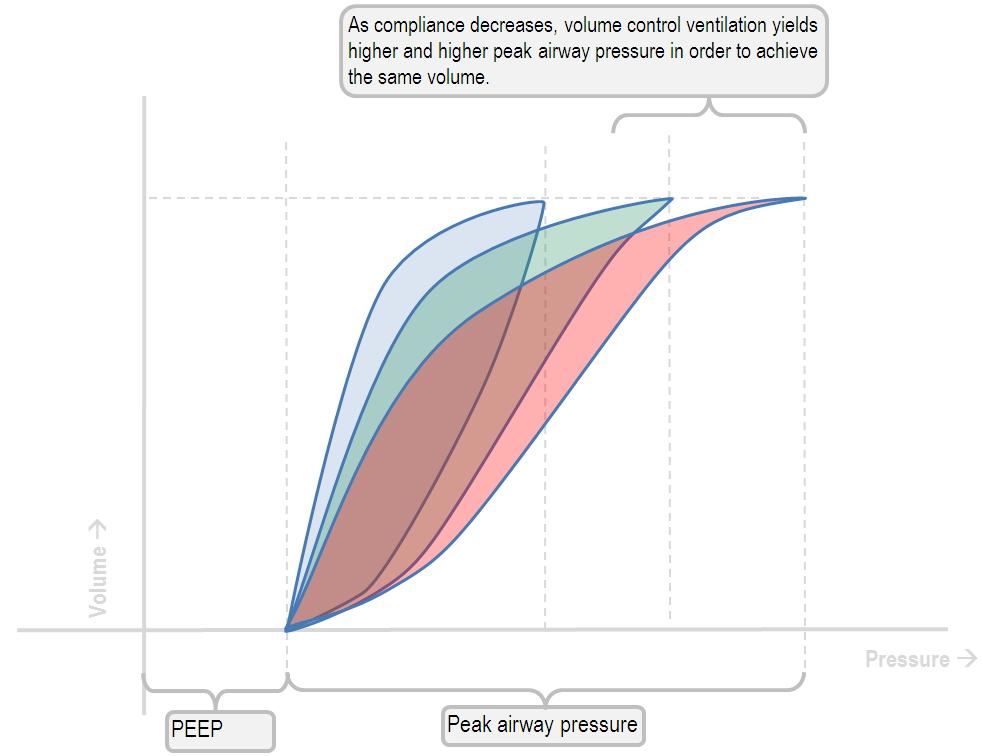
- In pressure-controlled mode, the volume generated will decrease resulting in hypoventilation and hypercapnoea
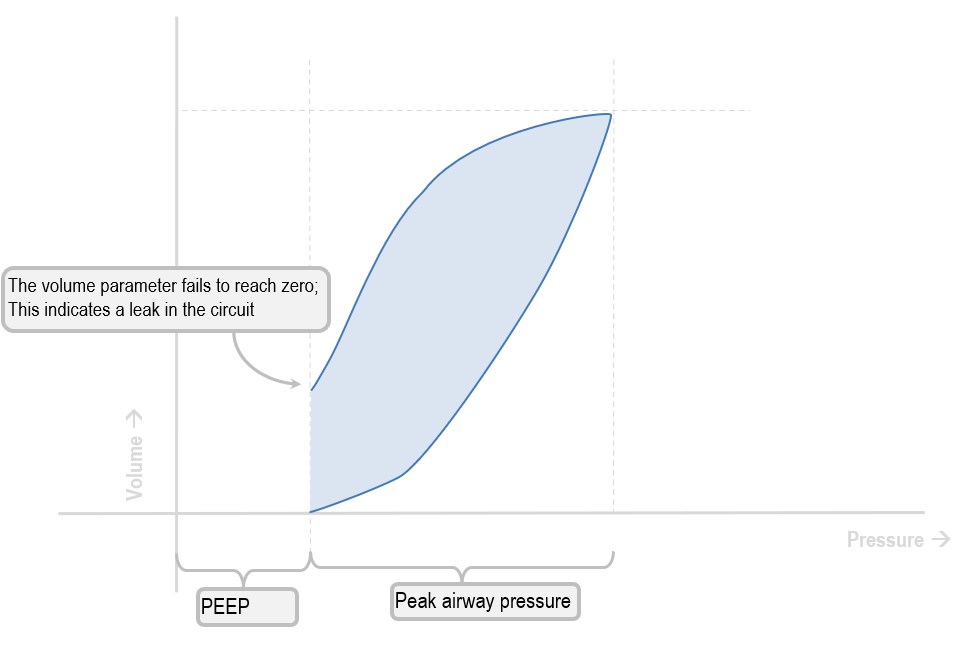
Air Leak
- With an air leak in the circuit, the volume does not return to zero
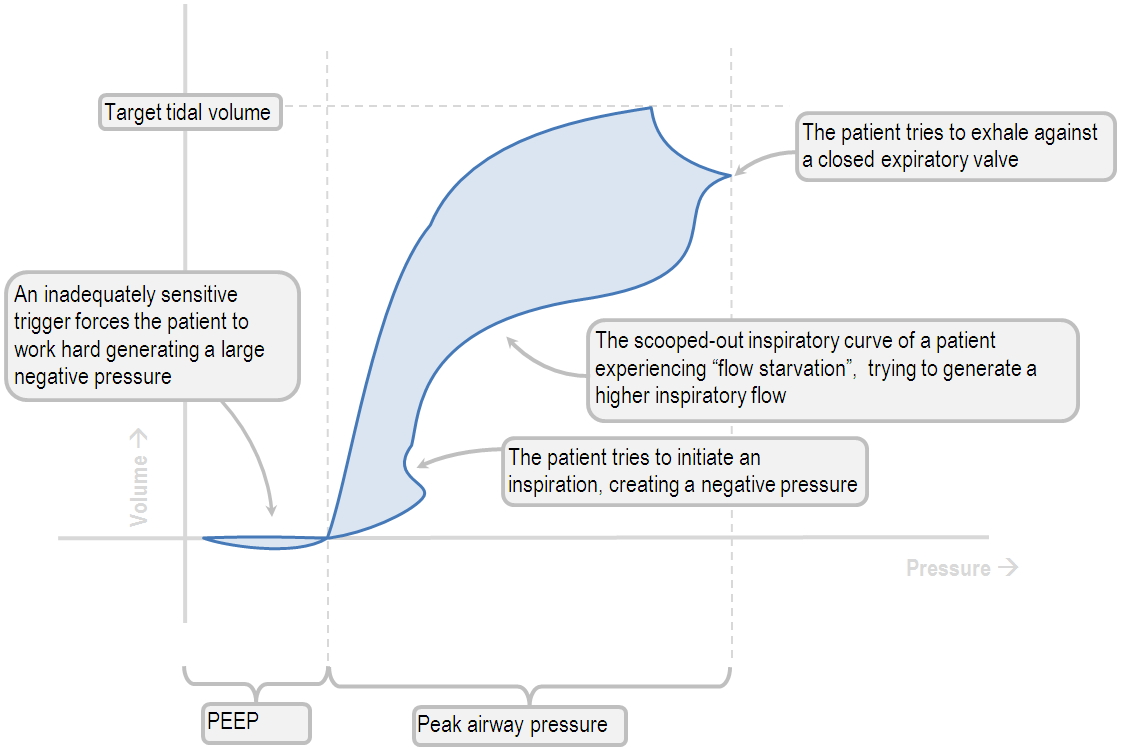
Patient-Ventilator Dyssynchrony
Work of Breathing
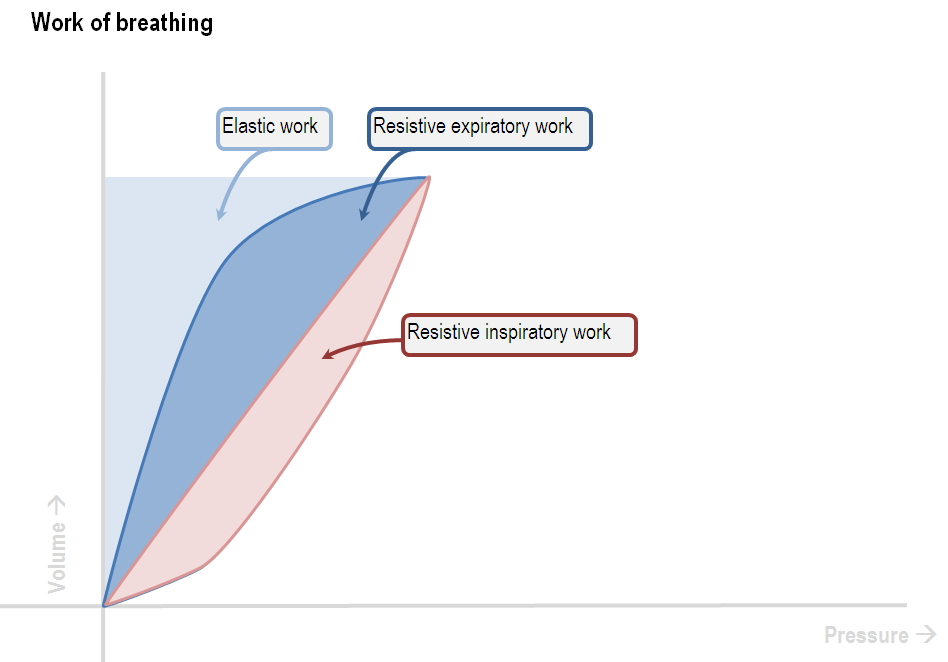
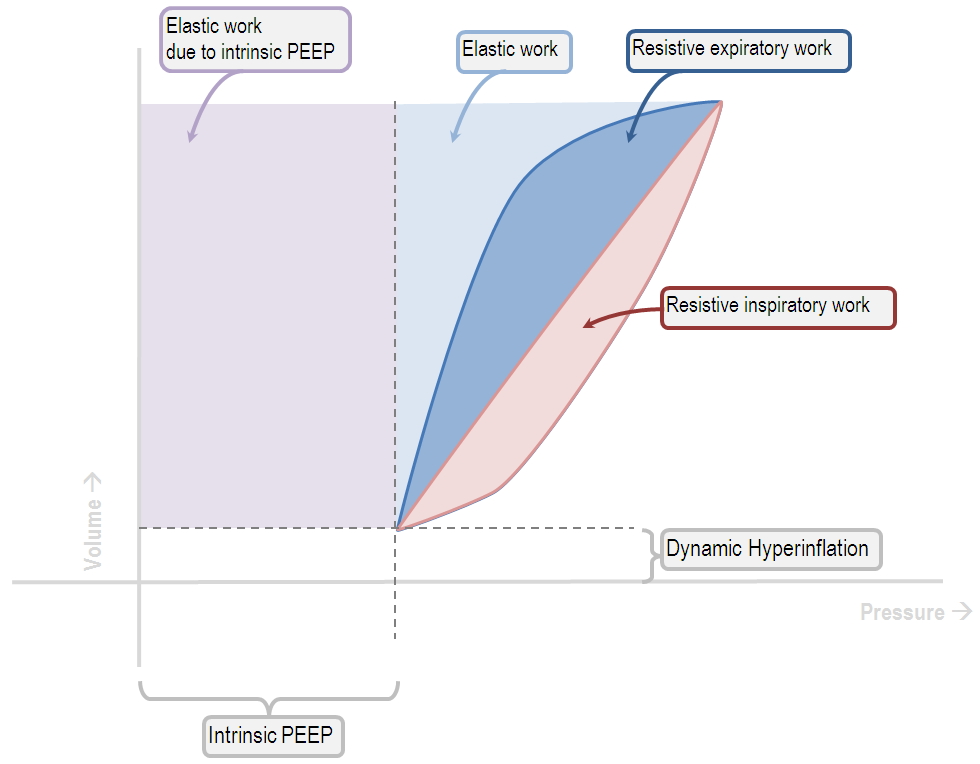
- Hence the work of breathing is the area to the left of the pressure-volume loop
- Anything that increases the convexity of the inspiratory curve or pushes the whole loop to the right increases the work of breathing