Pregnancy (hyperemesis gravidarum; generally within the first nine weeks of pregnancy)
Uremia
Fulminant hepatic failure
Ketoacidosis (e.g., diabetic ketoacidosis)
Hypercalcemia
Hyperthyroidism
Addison’s disease
Myocardial ischemia (anginal equivalent)
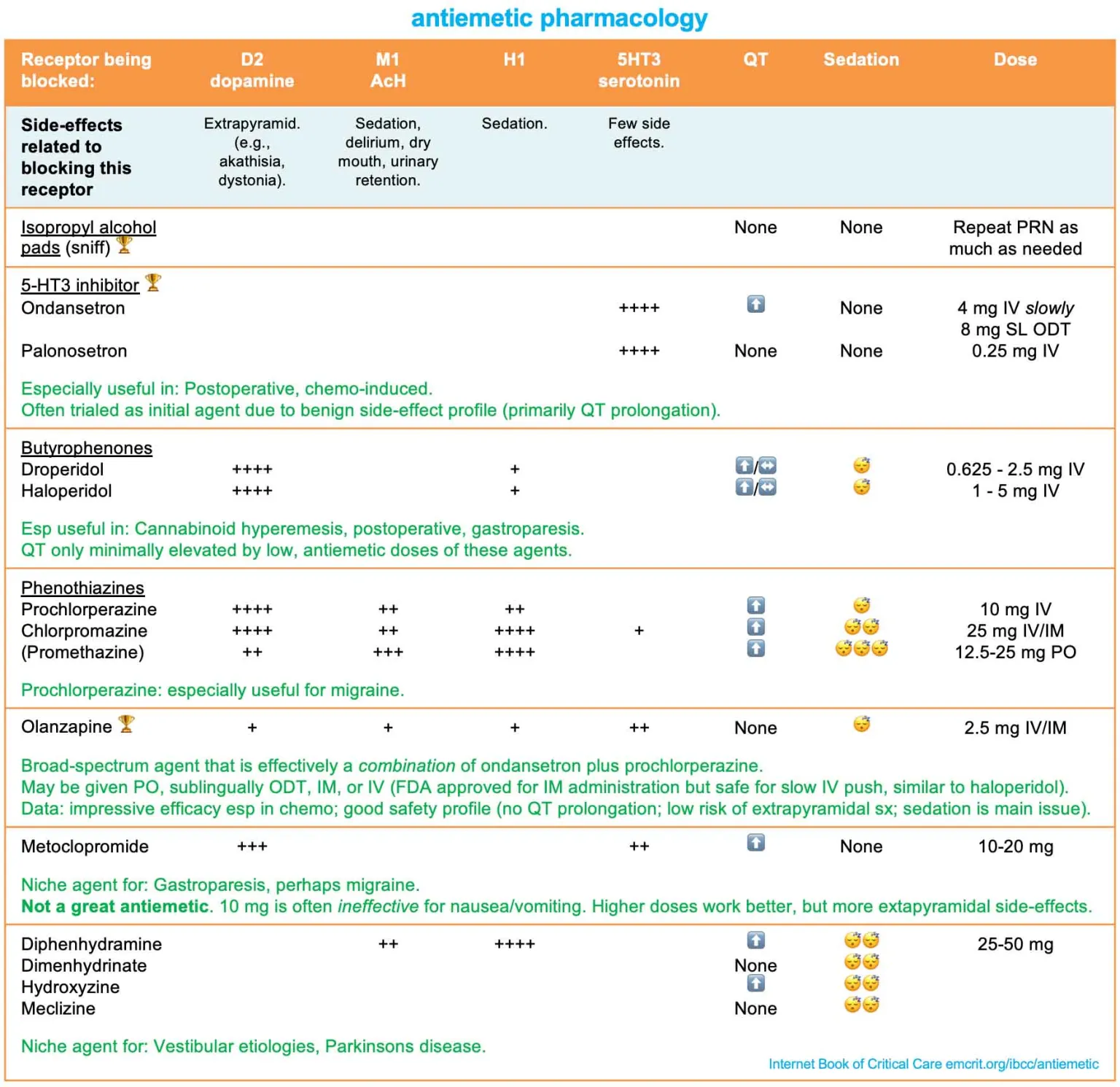
5-HTX3 Receptor Antagonists
Indication: general use with particular use in acute gastroenteritis
Ondansetron 4-8mg IV/PO 8-12 hourly
Dopamine Antagonists
EPSE (acute dystonic reactions) are more common in the elderly and people <20 years
EPSE is rarer with domperidone
Domperidone and metoclopramide have prokinetic activity which may be useful in gastroparesis
Metoclopramide 10mg IV/IM/PO 8-hourly
Particular use in migraine or acute gastroenteritis
Avoid use in patients younger than 20 years and older persons—acute dystonic reactions are more common in young adults and older persons
Can cause extrapyramidal adverse effects—avoid in Parkinson disease
Can cause irreversible tardive dyskinesia
Do not use for longer than 5 days
Avoid if stimulation of the gastrointestinal tract is dangerous (eg gastrointestinal obstruction or perforation)
Prochlorperazine 20mg PO first dose then 10mg PO 2 hours later then 5-10mg PO 8-hourly
General use, particularly for nausea and vomiting associated with migraine, motion sickness or acute gastroenteritis
Can cause sedation, prolongation of the QT interval and extrapyramidal adverse effects, including tardive dyskinesia and akathisia; avoid in Parkinson disease
Can have anticholinergic effects
Droperidol is often used for prevent PONV 0.25-0.625 mg IM as a single dose
Mostly limited use with particular use for opioid induced nausea and vomiting and anxious or agitated patients
Has a long duration of action and counteracts adverse opioid effects
Can cause sedation and EPS; avoid in Parkinsons
Sedating Antihistamines
Promethazine 25mg orally every 4-6 hours (max 100 mg in 24 hours)
General use, with particular use in motion sickness
Can cause sedation, lower the seizure threshold and have anticholinergic effects
Can cause extrapyramidal adverse effects, including tardive dyskinesia; avoid in Parkinson disease
Cyclizine for motion sickness
Anticholinergics
Hyoscine hydrobromide can be used prevent motion sickness
Substance P Antagonists
Aprepitant, fosaprepitant, fosnetupitant and netupitant are used with a 5HT3 antagonist and dexamethasone to prevent nausea and vomiting with highly or moderately emetogenic chemotherapy
Corticosteroids
Dexamethasone is used to prevent
Limited use with PONV and as adjunctive treatment in chemotherapy-induced nausea and vomiting or with bowel obstruction or raised intracranial pressure
May cause mood or sleep disturbance; other adverse effects are unlikely with a single dose
Use with caution in sepsis, haematological malignancy and diabetes