Cannula Selection
| IVC Gauge | Indications |
|---|---|
| 24 gauge (yellow) | Paediatrics |
| 22 gauge (blue) | Elderly patients with smaller veins; suitable for slow infusions and IV medications |
| 20 gauge (pink) | Suitable for most infusions including antibiotics. The first choice of cannula for adults |
| 18 gauge (green) | Favoured by radiology for contrast infusions. IDeal cannula for infusion of blood products |
| 16 gauge (grey) and 14 gauge (orange) | Large bore cannula used for resuscitation purposes |
Procedure
-
5 moments hand hygiene and put on gloves
-
Tourniquet (just below arterial pressure)
- Toruniquet is too tight if the patient complains or you cannot feel the arterial pulse
- Can use three tourniquets as well
-
Apply a towel or bluey below arm
-
Make the vein obvious:
- Veins can take time to stand out, always wait sufficient time for a vein to become apparent
- Ask the patient for their best vein
- Blanket/make the patient is warm
- Warm water in a glove
- Put arm below the level of the heart
- Tap the veins or rub the veins
- Go for the most distal place that satisfies the purpose
- Position the arm in line with the motion of your arm (e.g. out to the side)
- Straighter and larger the vein, the easier
- Can also go at the point of bifurcation as its less likely to roll away
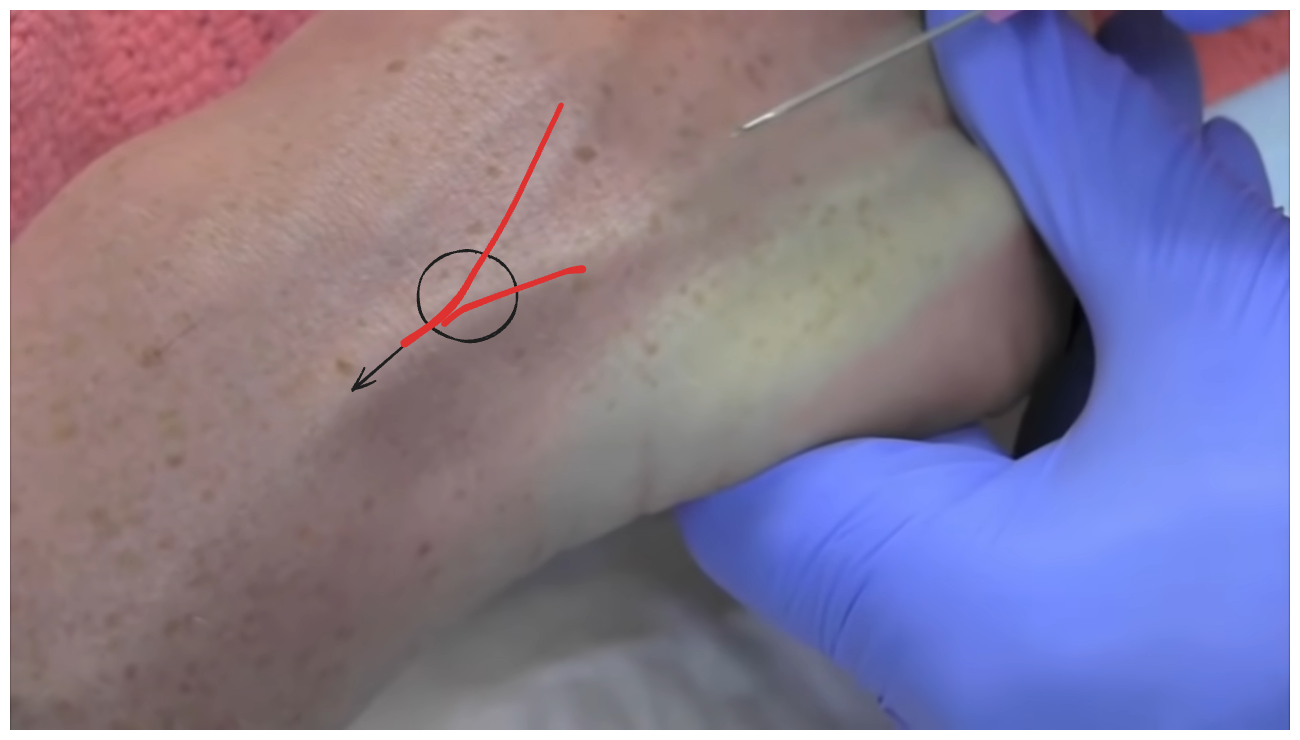
- Can also go at the point of bifurcation as its less likely to roll away
-
Semi-open some of the equipment and have sharps bin nearby
- Cap the syringe
- Flush the bung
- Consider bending the cannula to achieve a shallower angle
-
Ask the patient if they have any allergies
-
Apply chlorhexidine
-
Hold cannula at sides and loosen the cannula and put it back into place
- Thumb and middle finger
- Make sure it is the lowest structure of your hand
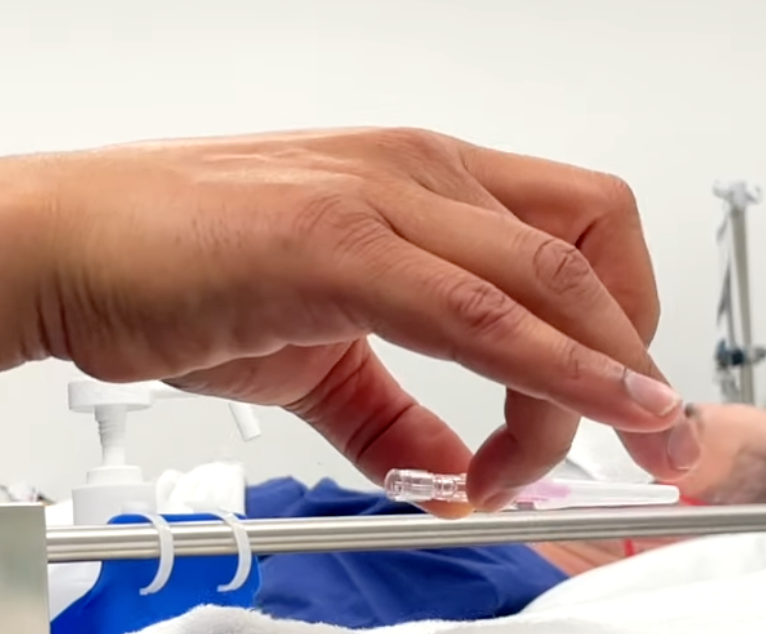
- Make sure your cannula is the parallel to the vein
-
Tense the skin over the side
- Make sure your thumb when you apply tension is not in the way of the cannula (e.g. over the knuckle edge or to the side slightly)
- Many ways to apply tension and try to apply counter traction where possible (e.g. flexing the wrist)
- Can use the C finger approach or can even pull on the skin from both sides
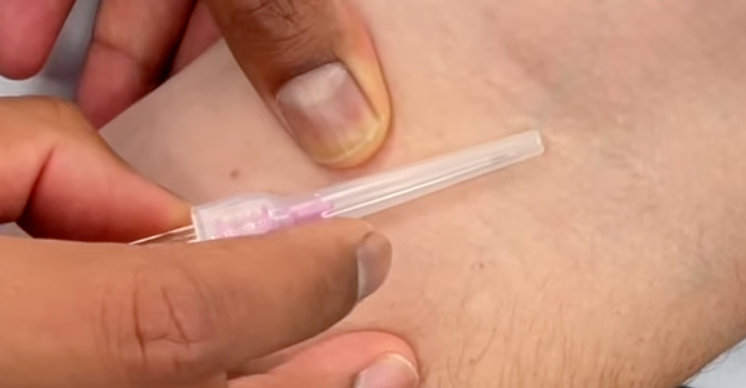
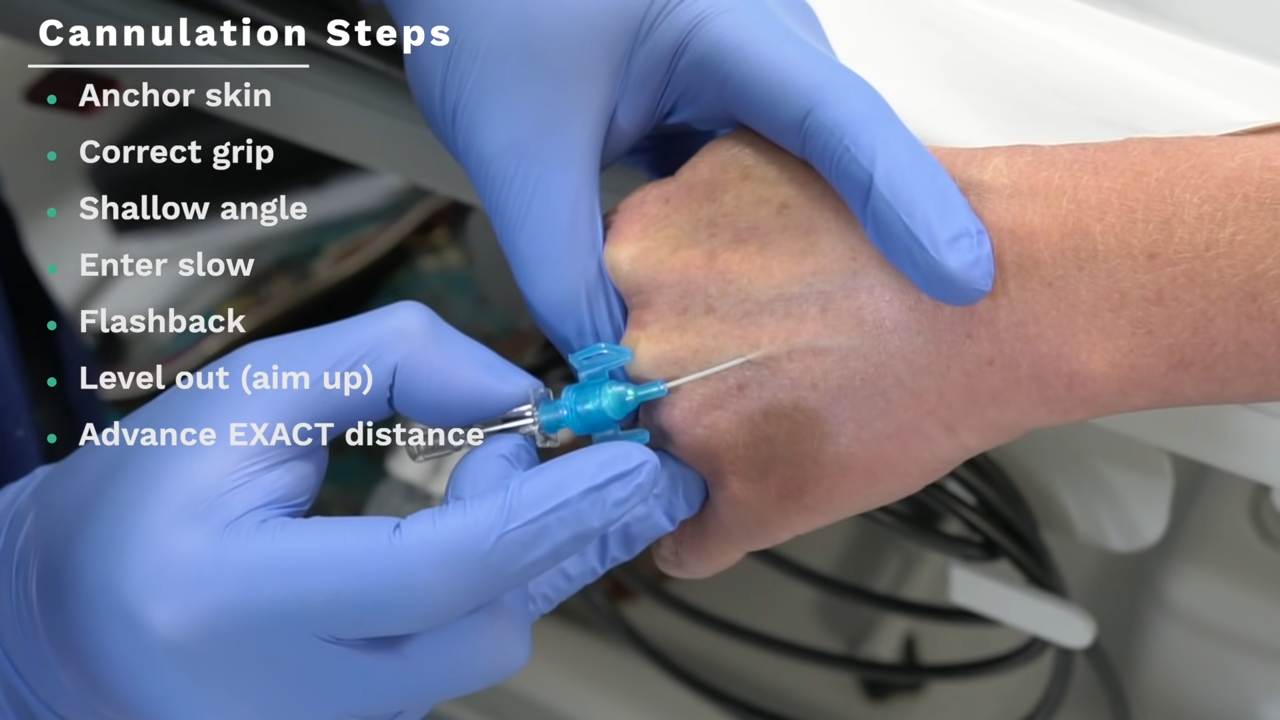
- Can use the C finger approach or can even pull on the skin from both sides
-
Level when you find flushback then advance a few mm
- Advance the cannula very slowly until you get flushback
- Rest your hand or any surface you can to reduce tremor
-
Place hand proximally to block vein
-
Loosen tourniquet
-
Dispose cannula
-
Put on bung (jiggle on and then screw)
-
Flush the cannula and can do pulse test
-
Apply tegederm
-
Dispose waste
-
Hand hygiene
Review
Link to original[Insert type of review] Medical Officer Dr [name] Asked to review day 3 IVC Patient consented to review [size] _G IVC in _[position] - Nil pain - Nil erythema - Nil oedema - Nil induration or palpable cord along path of cannula - Patient afebrile - Nil other complaints - Visual infusion phlebitis score = _ Impression: - IV site appears _health/unhealthy - Sign of cannula infection/phlebitis: _yes/no Plan: - Keep and observe cannula for further 24 hours/please remove IVC and re-site - Team to review need for cannula mane - Notify Medical Officer if any concerns