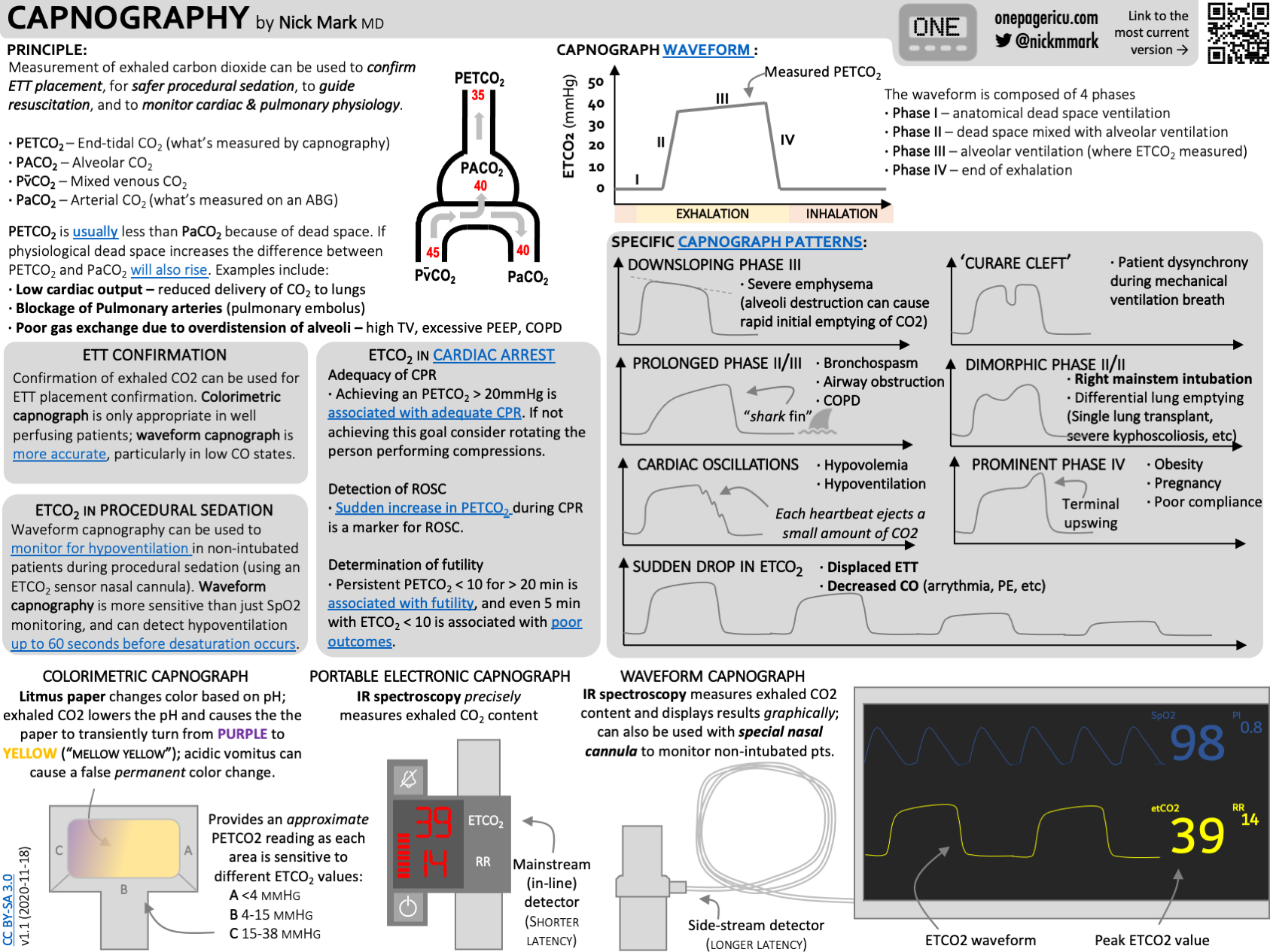
Sampling of the exhaled gas can be doneby mainstram (in-line) detectors or side-stream detectors
Side stream detectors may take a few seconds to change
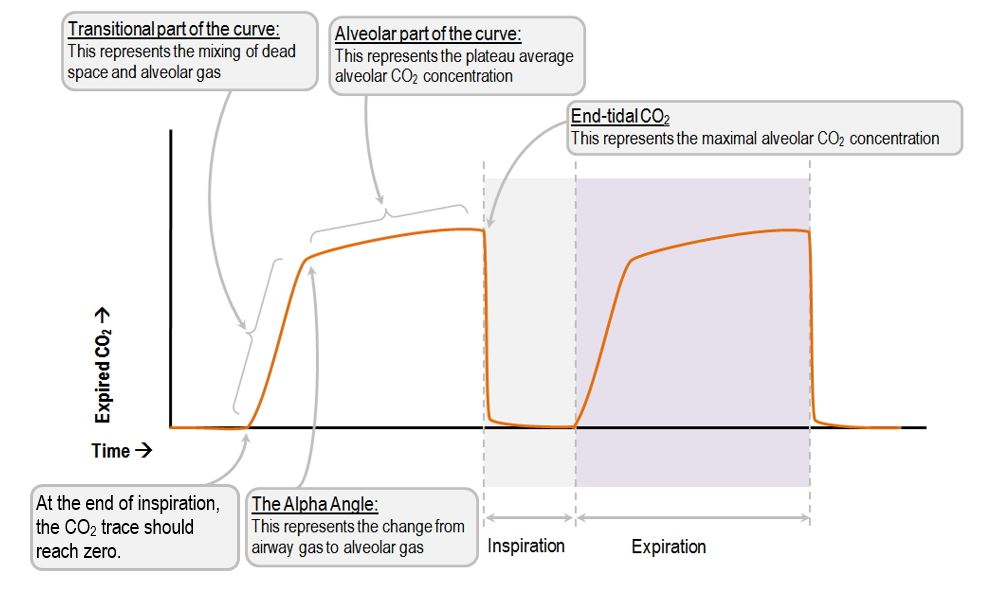
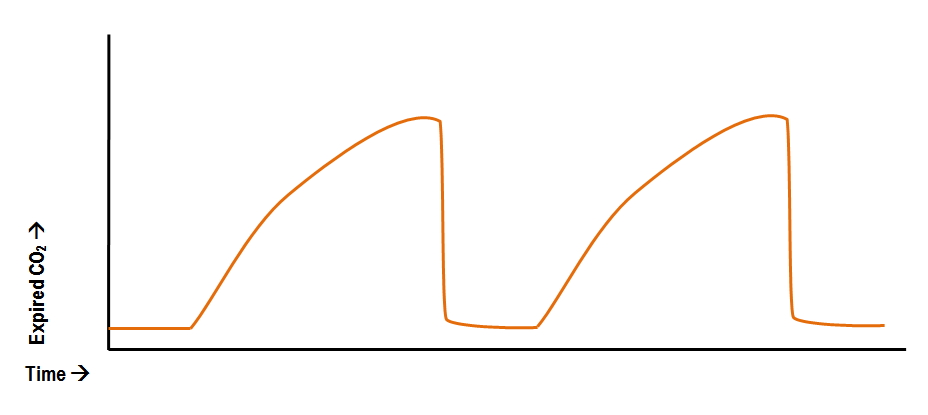
Normal Capnometry Waveform
Transitional part represents the rush of dead space gas from the airways where gas from the upper airways slowly gives way to mixed gas from the lower airways; its gradient is dependent on resistance to airflow in the airflows
Alpha angle is the transitional point between airway gas and alveolar gas
Alveolar part of the curve represents the gradual diffusion of COX2 out of the alveoli into the capnograph
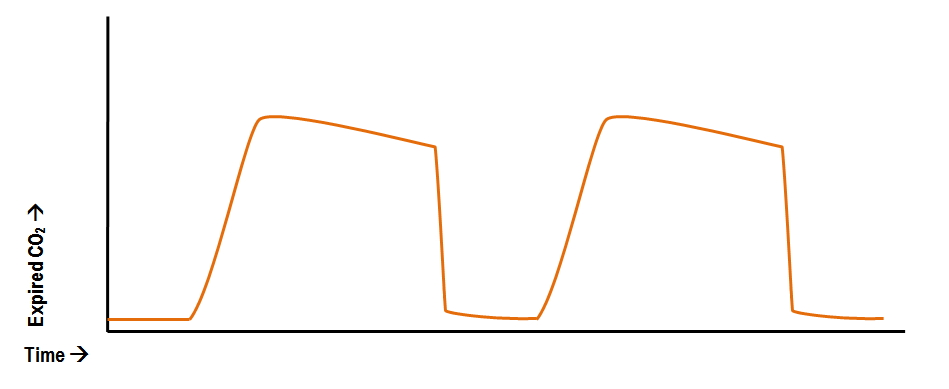
The slope of this curve gives some information regarding the stability of the lung volume during expiration; if the COX2 begins to drop during this phase, there is likely a gas leak (e.g. pneumothorax, cuff leak)
End-tidal COX2
Inspiratory curve
In conditions of mechanical obstruction, for example if some sort of horrible tumour or goitre is causing airway obstruction, this obstacle is fixed, and the ventilator is powerless to overcome it. In this scenario, the inspiratory phase will be a gentle slope, as the ventilator fights to blow air into the patient
Abnormal Waveforms
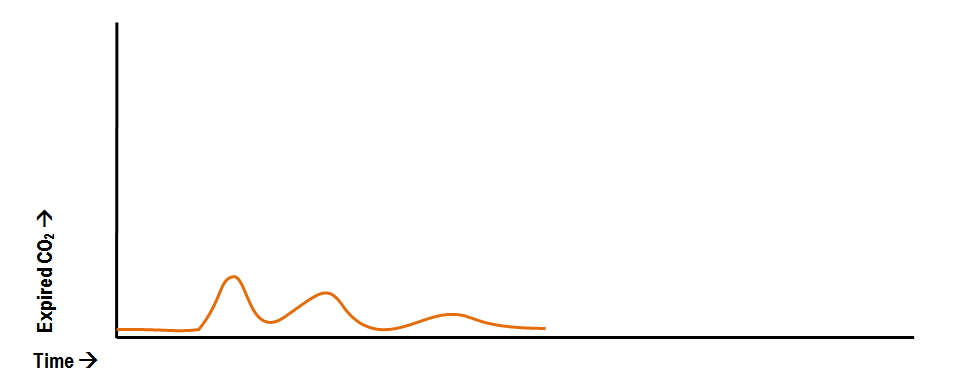
Oesophageal Intubation
Oesophageal intubation
Ventilator disconnection
Airway obstruction (e.g. patient suddenly biting down on tube)
ETT perforation
Capnograph disconnection or obstruction
Water droplet contamination of capnography module
Apnoea test in a brain dead patient
Cardiac/respiratory arrest (without CPR)
Endobronchial Intubation
ETT tip is in the right main bronchus but cuff is not occluding the left lung
Bronchospasm
No distinct alpha angle indicating that the dead space has not finished emptying by the time the next inspiration comes along
Mechanical Airway Obstruction
Inspiratory and expiratory flow are both affected
Emphysema
Gas exchange surface is poor and compliance of the lung is increased so the alveolar gas exchanges rapidly
Gas in the ventilator tubing diffuses backwards into the patient
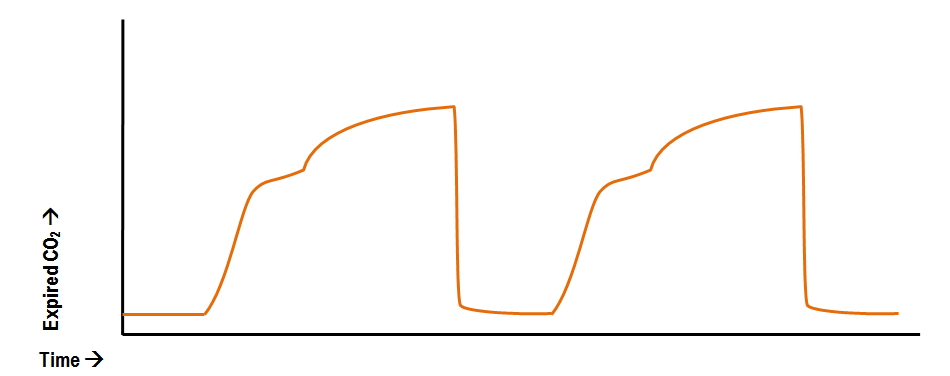
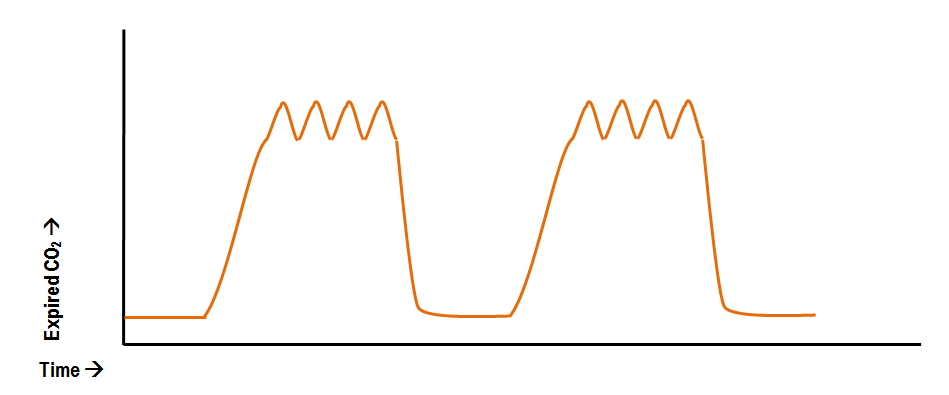
Cardiac Oscillations
May be a feature of cardiomegaly
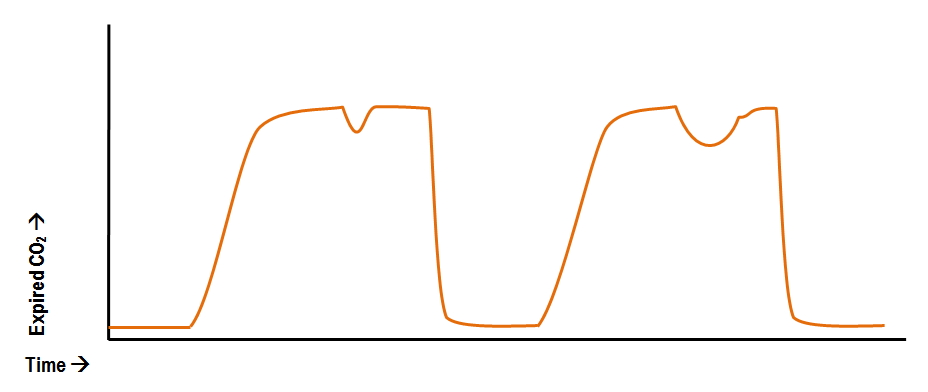
Curare cleft
Patient making an inspiratory attempt
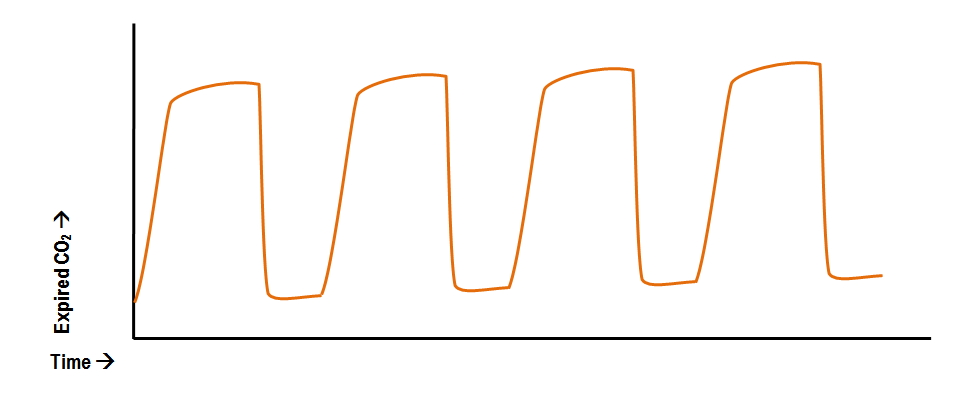
Saturated COX2 Absorber
The COX2 absorber is saturated (seen only in anaesthesia machines)
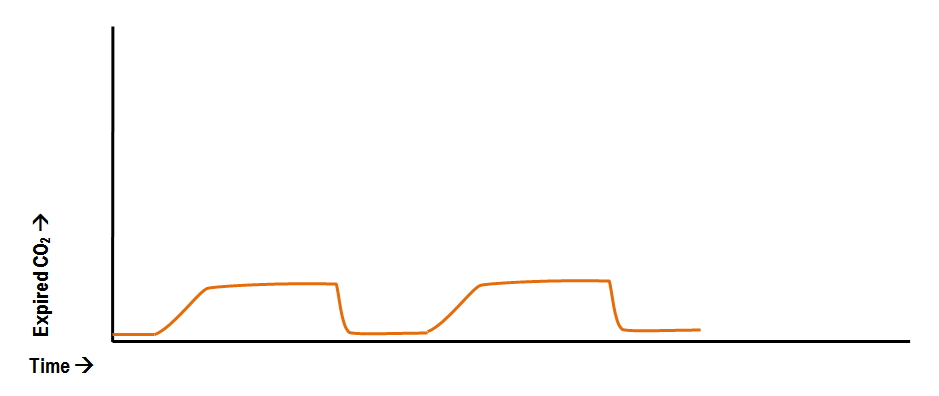
Hypothermia
Seen in hypothermic states due to decreased metabolic rate
Can also occur in low-cardiac-output states and deep anaesthesia
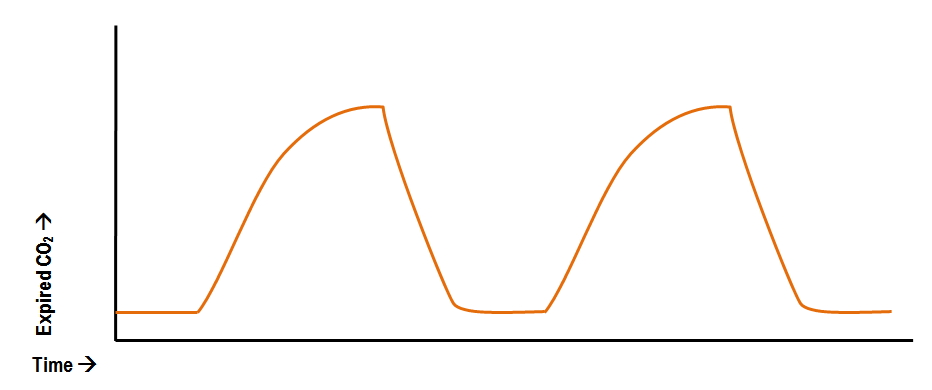
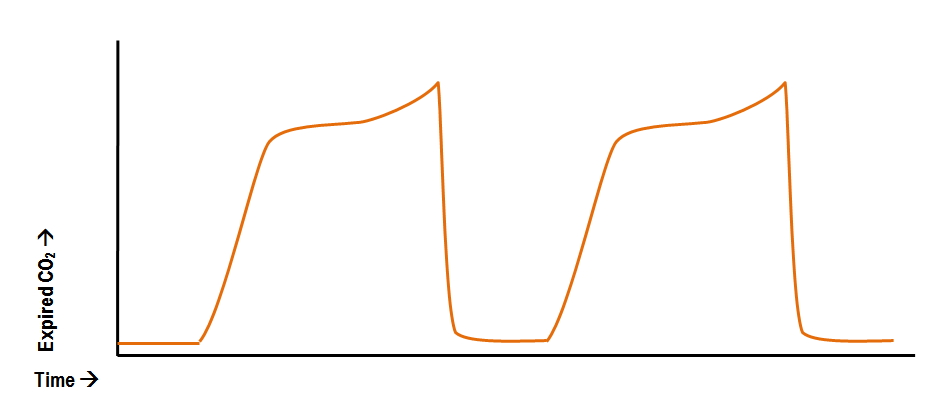
Poor Lung Compliance
Also called pigtail capnogram
Seen in poor lung compliance where there is a sudden peak of pre-inspiratory expired COX2 due to sudden airway closure
Ortega, R., Connor, C., Kim, S., Djang, R., Patel, K., 2012. Monitoring Ventilation with Capnography. New England Journal of Medicine 367, e27. https://doi.org/10.1056/NEJMvcm1105237